-
Ahoy and Welcome to the New SSS Forum!!
As you can see, we have migrated our old forums to new software. All your old posts, threads, attachments, and messages should be here. If you see anything out of place or have technical questions, please take a look in
You should be able to login with your old credentials. If you have any issues, try resetting your password before clicking the Contact Us link.
Cheers - SSS Technical Infrastructure
You are using an out of date browser. It may not display this or other websites correctly.
You should upgrade or use an alternative browser.
You should upgrade or use an alternative browser.
New Boat 4 Sled
- Thread starter sleddog
- Start date
- Featured

Building FRIENDSHIP by Dan Gurney.
Dedicated to Tchoupitoulas and all those who have participated in wooden boat building.
I’ve got a 13’ flat-bottom skiff. She’s carbon black outside and varnished wood inside. She’s got a handsome loose-footed tanbark sprit sail fitted to spars of spruce and bamboo. She is as pretty as her home waters, Tomales Bay.
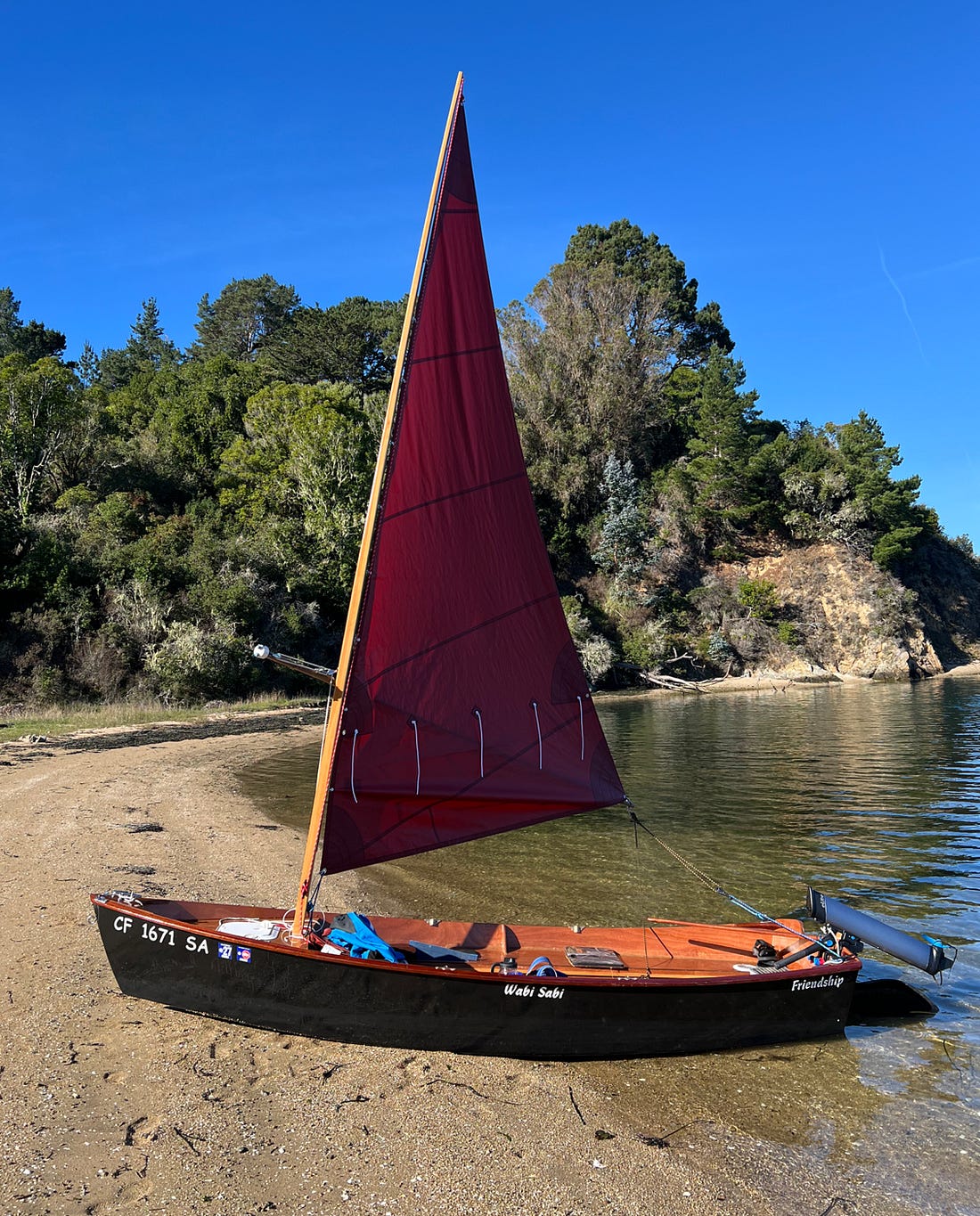
Sometimes people approach, offering compliments. “Beautiful boat,” they might say. Coming closer, though, their smiles usually fade. Voices drop. She’s a tad scruffy. Questions replace compliments.
“You build it?” they might ask.
I answer, “I helped build her. A friend built her, mostly. I painted her—and I gave her a practical workboat finish.”
At this writing I’ve had her out fourteen times. She is showing early signs of wear and use already. And although she may be scruffy, I love my new skiff. I can fix her. She’s elder-friendly, repairable, tattered, versatile, valued, and well-behaved. She seems to know this.
Building a skiff never occurred to me. It was my friends’ idea.
For decades now, my friends and I have sailed on nearby Tomales Bay. We’re retired northern California seniors: Jerry, Dennis, me, Doug, and Daniel. Sailing is our social glue. We’ve sailed Tomales Bay for decades.
In the spring I announced to them that I had decided to quit sailing my singlehanded racing sailboat, a Banshee. I had just shared with them that ongoing cancer medications for stage four cancer have wasted my muscles and sapped my stamina so much that, despite working with a personal trainer, I had decided that I no longer feel strong and fit enough to safely sail sporty boats like my Banshee on Tomales Bay.
Doug said, “Don’t quit, Dan! Come motorboat with me.”
“Thanks, Doug,” I replied, “but I’m a sailor. I’m not ready for motorboats.”
Daniel suggested that I keep my beloved Banshee and use a small electric outboard motor. “Sail only when the wind is calm.”
“Find a sailboat for seniors,” Doug offered. “A rowing skiff with a small sail, maybe. Hard to find, though.”
Jerry knew a boat design that could work: a Chesapeake Light Craft Jimmy Skiff II designed by John Harris. It’s super simple to rig, launch and recover. It’s easy to sail, row, or motor, and small enough to make my home waters, Tomales Bay satisfy my diminishing hunger for adventure.
There was one major problem with this design. It’s available only as a kit. Assembly requires skill, energy, time, tools, and a workshop—none of which I had.
Jerry, a retired woodworker, had everything I lacked: talent, skill, energy, experience, and tools, together with a spacious workshop. He’d even been thinking about getting himself a singlehanded sailboat to use when it’s too calm for him to windsurf. I wondered if Jerry might assemble a Jimmy Skiff kit in exchange for the Banshee that I had aged out of.
Soon we met over tacos to see if we could make this work. Jerry’s wife, Deb, cautioned me, “Jerry makes mistakes, but he always figures out how to fix them.”
“Uh-oh,” I thought. “I’m persnickety. We’ll drive each other nuts!”
Then I realized: Life’s to live. This could be a triple win: Jerry builds me a boat, he’ll provide a great new home for my Banshee, and I can shed some of my persnicketiness.
We agreed the old-fashioned way, a verbal agreement, nothing in writing, and shook hands.
I ordered a Jimmy Skiff kit that evening.
Someone bought that finished boat right away. I reminded myself that I didn’t want a boat that someone else built. I wanted to build a boat that I can work on and fix. I wanted to learn woodworking skills from Jerry, and to build friendships along the way.
We got started. Jerry showed me how to use his router, orbital sander, drill press, and traditional hand tools. He taught me how to join the edges of wood panels by laying down watertight “fillets” [say FILL-its] made of epoxy thickened with wood flour. “You fillet like a pro, Dan.” We swapped stories, jokes, tears, laughs, and goof-ups. We talked more than we worked.
Jerry got lots done. On hot days I tired quickly and went home early. I was away with grandkids one week in August. My perfectionism sometimes bothered both of us. Jerry was patient with me. Doug checked in on us from time to time to make sure we were getting along. We got along; Jerry’s aloha spirit rubbed off on me and I could rely on it working out as agreed.
The skiff named herself: Friendship. We were building Friendship. I learned, gradually, to accept mistakes and do-overs, repairs and fixes. Jerry’s patience calmed me. In late August, my unfinished skiff came home to my garage for final assembly and paint. The same day, my Banshee moved to her new home at Jerry’s.
Seven weeks later Friendship was finally ready to launch. To celebrate, my wife Sarah and I had planned a big launch party with friends on my mid October birthday, a Monday holiday, but fierce northwesterlies forced us to postpone.Disappointed, Sarah and I, eager to launch, decided to launch the first day the winds calmed.
That day arrived right away, Tuesday, October 14, so we launched even though none of my friends could to join us. It was raining lightly. I felt disappointment about having was no wind, no company.
“We really shouldn’t go out alone. What if your boat leaks?” Sarah asked.
“It won’t leak,” I tried to hide my annoyance.
“How can you be so sure?” Sarah wanted to know.
“Because Jerry and I wouldn’t build a leaky boat! Let’s go!”
We motored across the bay. In twenty minutes we arrived across the bay at Duck Cove. We had all to ourselves. We enjoyed, as best we could, a drizzly picnic.
After lunch I decided to unscrew both the inspection ports to show to Sarah that Friendship didn’t leak. The port tank was dry, as expected. But when I opened the second inspection port, I found gallons of saltwater inside. My dismay was immeasurable. I could barely breathe.
“The starboard floatation tank is full of water!” I whispered. “Friendship leaks. Badly!” I knew that I had significant repairs to make.
Sarah asked, “Should we call the Coast Guard?” (We had a radio.) TBC
Dedicated to Tchoupitoulas and all those who have participated in wooden boat building.
I’ve got a 13’ flat-bottom skiff. She’s carbon black outside and varnished wood inside. She’s got a handsome loose-footed tanbark sprit sail fitted to spars of spruce and bamboo. She is as pretty as her home waters, Tomales Bay.
Sometimes people approach, offering compliments. “Beautiful boat,” they might say. Coming closer, though, their smiles usually fade. Voices drop. She’s a tad scruffy. Questions replace compliments.
“You build it?” they might ask.
I answer, “I helped build her. A friend built her, mostly. I painted her—and I gave her a practical workboat finish.”
At this writing I’ve had her out fourteen times. She is showing early signs of wear and use already. And although she may be scruffy, I love my new skiff. I can fix her. She’s elder-friendly, repairable, tattered, versatile, valued, and well-behaved. She seems to know this.
Building a skiff never occurred to me. It was my friends’ idea.
For decades now, my friends and I have sailed on nearby Tomales Bay. We’re retired northern California seniors: Jerry, Dennis, me, Doug, and Daniel. Sailing is our social glue. We’ve sailed Tomales Bay for decades.
In the spring I announced to them that I had decided to quit sailing my singlehanded racing sailboat, a Banshee. I had just shared with them that ongoing cancer medications for stage four cancer have wasted my muscles and sapped my stamina so much that, despite working with a personal trainer, I had decided that I no longer feel strong and fit enough to safely sail sporty boats like my Banshee on Tomales Bay.
Doug said, “Don’t quit, Dan! Come motorboat with me.”
“Thanks, Doug,” I replied, “but I’m a sailor. I’m not ready for motorboats.”
Daniel suggested that I keep my beloved Banshee and use a small electric outboard motor. “Sail only when the wind is calm.”
“Find a sailboat for seniors,” Doug offered. “A rowing skiff with a small sail, maybe. Hard to find, though.”
Jerry knew a boat design that could work: a Chesapeake Light Craft Jimmy Skiff II designed by John Harris. It’s super simple to rig, launch and recover. It’s easy to sail, row, or motor, and small enough to make my home waters, Tomales Bay satisfy my diminishing hunger for adventure.
There was one major problem with this design. It’s available only as a kit. Assembly requires skill, energy, time, tools, and a workshop—none of which I had.
Jerry, a retired woodworker, had everything I lacked: talent, skill, energy, experience, and tools, together with a spacious workshop. He’d even been thinking about getting himself a singlehanded sailboat to use when it’s too calm for him to windsurf. I wondered if Jerry might assemble a Jimmy Skiff kit in exchange for the Banshee that I had aged out of.
Soon we met over tacos to see if we could make this work. Jerry’s wife, Deb, cautioned me, “Jerry makes mistakes, but he always figures out how to fix them.”
“Uh-oh,” I thought. “I’m persnickety. We’ll drive each other nuts!”
Then I realized: Life’s to live. This could be a triple win: Jerry builds me a boat, he’ll provide a great new home for my Banshee, and I can shed some of my persnicketiness.
We agreed the old-fashioned way, a verbal agreement, nothing in writing, and shook hands.
I ordered a Jimmy Skiff kit that evening.
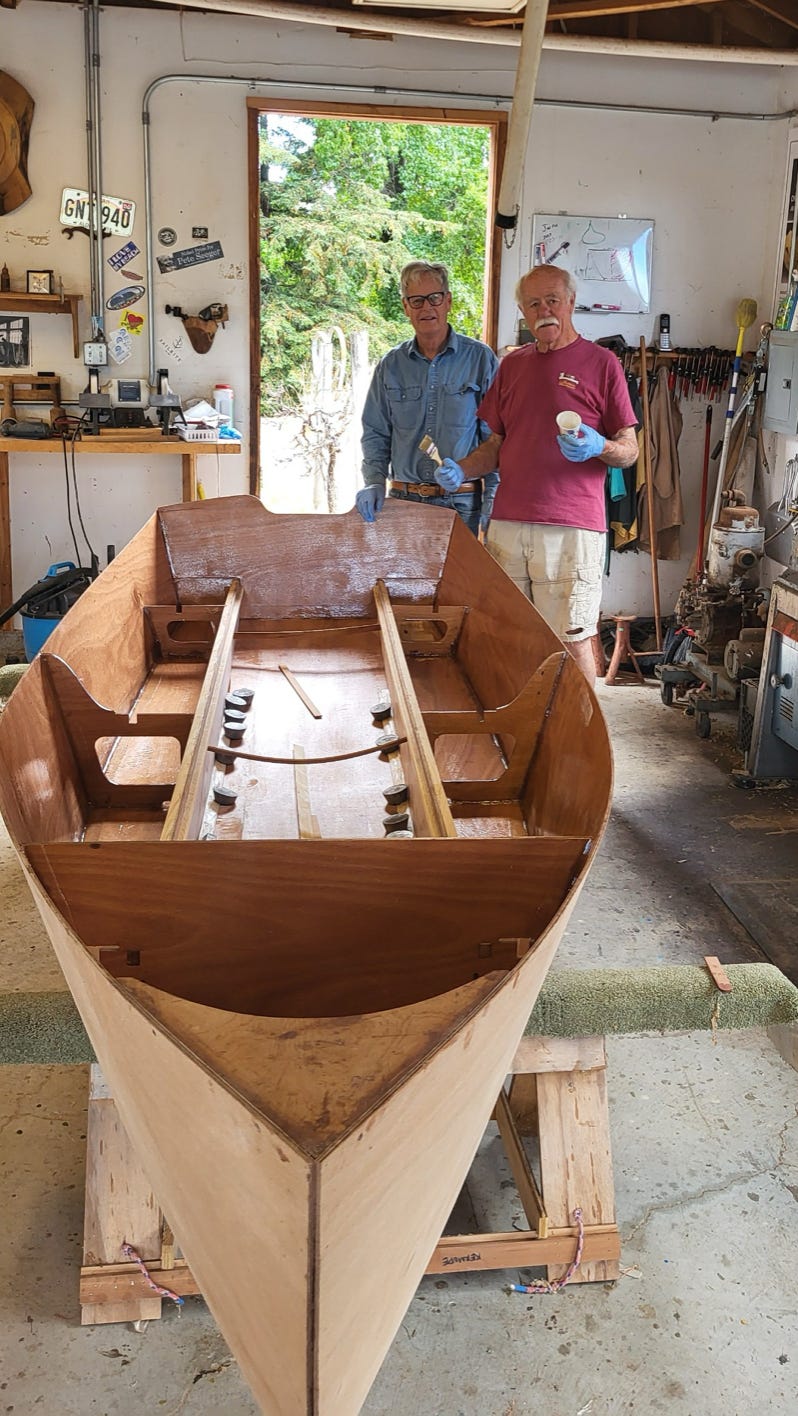
A few weeks later, DHL dropped three huge cardboard boxes at my door. We hauled them to Jerry’s workshop. Weeks of work lay ahead.
That’s when Dennis forwarded us a Craigslist ad for a beautifully finished Jimmy Skiff for sale by its Rohnert Park builder. He was asking for about the same amount of money that I had just sent off for the wood parts now spread out across the floor in Jerry’s workshop!Someone bought that finished boat right away. I reminded myself that I didn’t want a boat that someone else built. I wanted to build a boat that I can work on and fix. I wanted to learn woodworking skills from Jerry, and to build friendships along the way.
We got started. Jerry showed me how to use his router, orbital sander, drill press, and traditional hand tools. He taught me how to join the edges of wood panels by laying down watertight “fillets” [say FILL-its] made of epoxy thickened with wood flour. “You fillet like a pro, Dan.” We swapped stories, jokes, tears, laughs, and goof-ups. We talked more than we worked.
Jerry got lots done. On hot days I tired quickly and went home early. I was away with grandkids one week in August. My perfectionism sometimes bothered both of us. Jerry was patient with me. Doug checked in on us from time to time to make sure we were getting along. We got along; Jerry’s aloha spirit rubbed off on me and I could rely on it working out as agreed.
The skiff named herself: Friendship. We were building Friendship. I learned, gradually, to accept mistakes and do-overs, repairs and fixes. Jerry’s patience calmed me. In late August, my unfinished skiff came home to my garage for final assembly and paint. The same day, my Banshee moved to her new home at Jerry’s.
Seven weeks later Friendship was finally ready to launch. To celebrate, my wife Sarah and I had planned a big launch party with friends on my mid October birthday, a Monday holiday, but fierce northwesterlies forced us to postpone.Disappointed, Sarah and I, eager to launch, decided to launch the first day the winds calmed.
That day arrived right away, Tuesday, October 14, so we launched even though none of my friends could to join us. It was raining lightly. I felt disappointment about having was no wind, no company.
“We really shouldn’t go out alone. What if your boat leaks?” Sarah asked.
“It won’t leak,” I tried to hide my annoyance.
“How can you be so sure?” Sarah wanted to know.
“Because Jerry and I wouldn’t build a leaky boat! Let’s go!”
We motored across the bay. In twenty minutes we arrived across the bay at Duck Cove. We had all to ourselves. We enjoyed, as best we could, a drizzly picnic.
After lunch I decided to unscrew both the inspection ports to show to Sarah that Friendship didn’t leak. The port tank was dry, as expected. But when I opened the second inspection port, I found gallons of saltwater inside. My dismay was immeasurable. I could barely breathe.
“The starboard floatation tank is full of water!” I whispered. “Friendship leaks. Badly!” I knew that I had significant repairs to make.
Sarah asked, “Should we call the Coast Guard?” (We had a radio.) TBC
Last edited:
Sarah asked, “Should we call the Coast Guard?” (We had a radio.)
I took a breath to collect myself. I remembered the bilge pump. “No. We got here. We can pump her out. We can cross back over the bay.”
The wind was calm. Deciding to save the electric motor in case we needed it, we hoisted the sail and set off. Sarah paddled, I pumped. Slowly we crossed the bay without needing a rescue.
When we got home, I couldn’t find words to tell Jerry about the leak.
So I phoned Doug who has built seven wooden boats. He listened carefully. “Calm down, Dan. We’ll fix the leak. Daggerboard trunk, probably. I’ll come over tomorrow morning with my toolbox. See you at 8 AM.”
I needed to vent some more. So I called Daniel who built his SCAMP. Daniel sounded like Doug. “You can fix it. If you need help, call me.” Still, I fretted into the wee hours. Sarah echoed Doug and Daniel, “It’s going to be okay. Your friends will help.”
At 8 am sharp Doug arrived with power tools. He cut holes in my brand new boat. He looked inside with his bright utility flashlight. “Thought so.” Doug said. “The daggerboard cassette. Needs fillets.”
“Needs fillets?” I thought. “I can do fillets. Jerry taught me.”
I could finally fully exhale.
Repairs took me almost a month to complete. In his emails, Dennis encouraged us again and again, “It’s not rocket surgery.”
Finally, I could tell Jerry, “Friendship’s fixed. No leaks.”
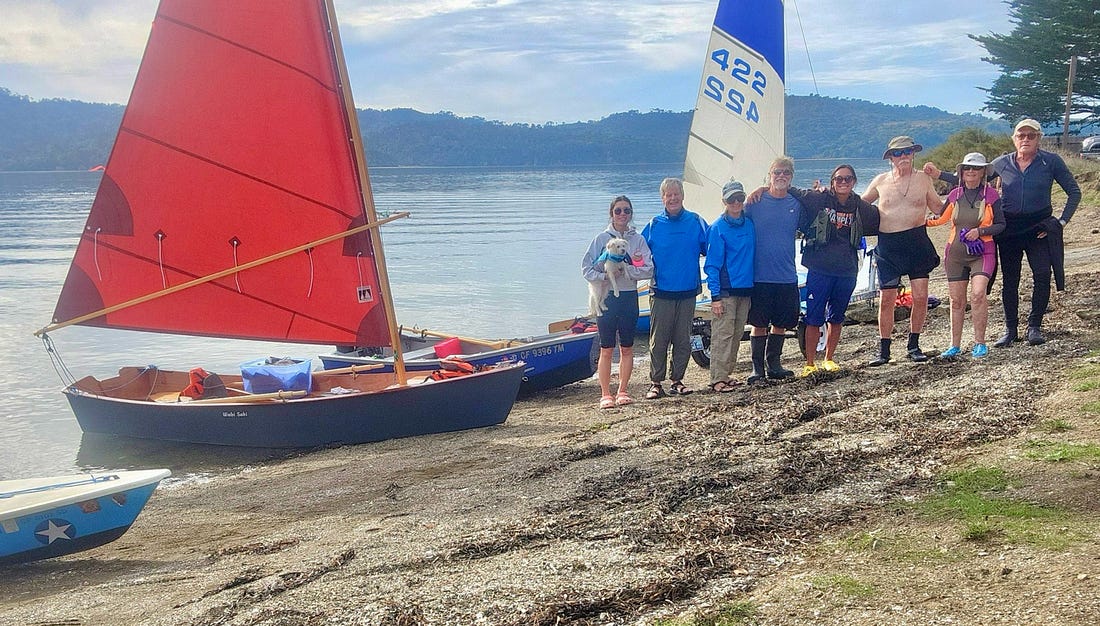
Almost a month after our planned birthday/launch party day my friends and I gathered on Veteran’s Day to celebrate Friendship, both the skiff and the social glue that binds us together.
Friendship will see me through the rest of my days on Tomales Bay. I’ll give her regular attention, make repairs, accept her imperfections, and navigate the troubles she’ll bring. I’ll take care of Friendship and Friendship will take care of me—with a more than a little help from our friends. •
I took a breath to collect myself. I remembered the bilge pump. “No. We got here. We can pump her out. We can cross back over the bay.”
The wind was calm. Deciding to save the electric motor in case we needed it, we hoisted the sail and set off. Sarah paddled, I pumped. Slowly we crossed the bay without needing a rescue.
When we got home, I couldn’t find words to tell Jerry about the leak.
So I phoned Doug who has built seven wooden boats. He listened carefully. “Calm down, Dan. We’ll fix the leak. Daggerboard trunk, probably. I’ll come over tomorrow morning with my toolbox. See you at 8 AM.”
I needed to vent some more. So I called Daniel who built his SCAMP. Daniel sounded like Doug. “You can fix it. If you need help, call me.” Still, I fretted into the wee hours. Sarah echoed Doug and Daniel, “It’s going to be okay. Your friends will help.”
At 8 am sharp Doug arrived with power tools. He cut holes in my brand new boat. He looked inside with his bright utility flashlight. “Thought so.” Doug said. “The daggerboard cassette. Needs fillets.”
“Needs fillets?” I thought. “I can do fillets. Jerry taught me.”
I could finally fully exhale.
Repairs took me almost a month to complete. In his emails, Dennis encouraged us again and again, “It’s not rocket surgery.”
Finally, I could tell Jerry, “Friendship’s fixed. No leaks.”
Almost a month after our planned birthday/launch party day my friends and I gathered on Veteran’s Day to celebrate Friendship, both the skiff and the social glue that binds us together.
Friendship will see me through the rest of my days on Tomales Bay. I’ll give her regular attention, make repairs, accept her imperfections, and navigate the troubles she’ll bring. I’ll take care of Friendship and Friendship will take care of me—with a more than a little help from our friends. •

AntsUiga
Silver Alert Moore 24
I trust IYC was involved with the folks and location.Sarah asked, “Should we call the Coast Guard?” (We had a radio.)
I took a breath to collect myself. I remembered the bilge pump. “No. We got here. We can pump her out. We can cross back over the bay.”
The wind was calm. Deciding to save the electric motor in case we needed it, we hoisted the sail and set off. Sarah paddled, I pumped. Slowly we crossed the bay without needing a rescue.
When we got home, I couldn’t find words to tell Jerry about the leak.
So I phoned Doug who has built seven wooden boats. He listened carefully. “Calm down, Dan. We’ll fix the leak. Daggerboard trunk, probably. I’ll come over tomorrow morning with my toolbox. See you at 8 AM.”
I needed to vent some more. So I called Daniel who built his SCAMP. Daniel sounded like Doug. “You can fix it. If you need help, call me.” Still, I fretted into the wee hours. Sarah echoed Doug and Daniel, “It’s going to be okay. Your friends will help.”
At 8 am sharp Doug arrived with power tools. He cut holes in my brand new boat. He looked inside with his bright utility flashlight. “Thought so.” Doug said. “The daggerboard cassette. Needs fillets.”
“Needs fillets?” I thought. “I can do fillets. Jerry taught me.”
I could finally fully exhale.
Repairs took me almost a month to complete. In his emails, Dennis encouraged us again and again, “It’s not rocket surgery.”
Finally, I could tell Jerry, “Friendship’s fixed. No leaks.”
Almost a month after our planned birthday/launch party day my friends and I gathered on Veteran’s Day to celebrate Friendship, both the skiff and the social glue that binds us together.
Friendship will see me through the rest of my days on Tomales Bay. I’ll give her regular attention, make repairs, accept her imperfections, and navigate the troubles she’ll bring. I’ll take care of Friendship and Friendship will take care of me—with a more than a little help from our friends. •
Howard Spruit
Member

Tom P.
m/v PACIFIC LOON
November 2014 we got to hear, and sing along with, Country Joe at the Freight & Salvage, Berkeley. He led us through his classics that are now ringing through my head. “ 1,2,3,4 what are we fighting for..?” and more. Relevant then and now. SORRY if this offends anyone.RIP Country Joe McDonald
Last edited:
Our oceans, fish and wildlife, winds and currents, our entire Blue Marble and her future generations are at imminent risk of demise from the madness coming out of the White House and its cronies. I do not care if I offend anyone calling attention to the relevancy of the danger that exists and welcome anyone to this space, solo sailors or not.November 2014 we got to hear, and sing along with, Country Joe at the Freight & Salvage, Berkeley. He led us through his classics that are now ringing through my head. “ 1,2,3,4 what are we fighting for..?” and more. Relevant then and now. SORRY if this offends anyone.